
Corporate Law Case: Hutton vs. West Cork Railway Co. (1883) 23 Ch. D. 654.
Case: Proper purpose of Company funds
Plaintiff: Hutton
Defendant: West Cork Railway Company
Case Citations: (1883) 23 Ch. D. 654.
This case is related to proper Purpose of Company Funds.
Facts of the Case:
The West Cork Railway Company sold its railway business to another railway company. After the sale, it stopped carrying on its railway business. Its remaining purpose was to settle its affairs, pay its debts, and distribute the remaining money to those entitled to it.
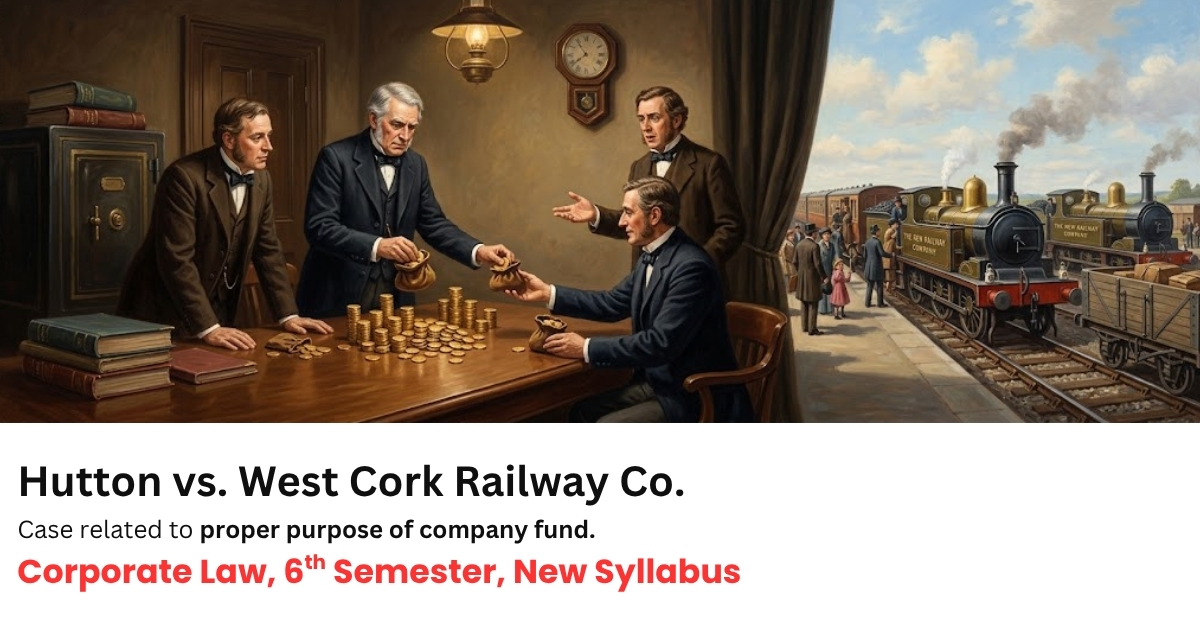
The company received about £141,934 from the sale. At a general meeting, the shareholders approved a proposal to use some of this money to pay the company’s former officers and directors.
The company proposed to pay £1,050 to its officers as compensation for losing their jobs, even though they had no legal right to such payment. It also proposed to pay about £1,500 to the directors for their past services, although no payment had been promised to them earlier.
Hutton, a debenture holder of the company, challenged the resolution. He argued that the company could not use its remaining money for these payments and asked the court to stop the payments.
Legal Issues:
- Whether the company could use its remaining funds to pay its officers and directors.
- Whether directors could be rewarded for past services without a prior promise of payment.
- Whether such payments were allowed after the company had sold its business.
- Whether the payments were reasonably connected with the company’s interests.
Decision of the Court:
The Court of Appeal, by a majority, held that the proposed payments were invalid. Cotton LJ and Bowen LJ formed the majority, while Baggallay LJ dissented.
The court held that company funds must be used for the company’s proper purposes and interests. Directors may decide how company funds are used, but they cannot use them for purposes unrelated to the company.
The court noted that the company had already sold its railway business. It was only left to settle its affairs, pay its debts, and distribute its remaining assets.
The proposed payments were not necessary for these purposes. They were rewards for past services and did not provide any real benefit to the company.
The directors also had no automatic right to payment for their past services. Therefore, the resolution approving the payments was invalid.
Principles Established:
- Company funds must be used for the benefit and proper purposes of the company.
- Directors cannot use company money simply to reward themselves or employees for past services.
- A payment should have a reasonable connection with the company’s business or interests.
- A company that has ceased trading has more limited purposes and cannot freely spend its remaining assets.
- Directors do not automatically have a right to remuneration for their services unless authorised by the company’s constitution or otherwise properly approved.